
Some cities you visit; Paris, you feel. The moment you step out of the metro, something grips you: the honey-coloured stone of the Haussmann buildings, the clink of a café terrace, the silhouette of a monument at the end of a perspective. In three days you obviously won't see everything, no lifetime would be enough, but you can taste the essentials, the ones that make you want to come back.
The itinerary below is designed to spare you two classic pitfalls: rushing everywhere, and queuing for hours. We move neighbourhood by neighbourhood, from the most iconic to the most intimate. Before you set off, keep a tab open on our what to do in Paris page: you'll find every activity mentioned here, ready to book.
One last word before we start: in Paris, booking ahead changes everything. The Eiffel Tower and the Louvre often mean one to two hours of waiting in peak season, and some slots sell out days in advance. A skip-the-line ticket is a whole morning regained.
Day 1, Iconic Paris: the Eiffel Tower & the Seine
Start with the star, the one the whole world comes to see. When Gustave Eiffel built his “Iron Lady” for the 1889 World's Fair, part of Paris cried scandal: they found it ugly and swore it would be dismantled within twenty years. More than a century later, it has become the very symbol of France, and that's what makes the visit so delicious.
Arrive early, around 9am, or at the end of the day to catch the golden light on the iron. Go up to the summit: at 276 metres, Paris unfolds like a living map, the Seine tracing its lazy curve between the monuments. Then cross to the Trocadéro on the other bank: it's from there that you'll take the finest photo of your trip.

The afternoon belongs to the Seine. Its banks, UNESCO World Heritage-listed, tell two thousand years of Parisian history: it was here, on the water, that the city was born and flourished. Wander up the river to the Pont Alexandre III, a Belle Époque masterpiece bristling with gilding and cherubs, before treating yourself to the day's highlight.
For nothing beats a sunset cruise to understand why Paris is called the City of Light. Comfortably seated, you watch the Louvre, the Musée d'Orsay, a reborn Notre-Dame and the Eiffel Tower drift by, which, at nightfall, sparkles for five minutes at the top of every hour. A suspended, almost unreal moment.
Book the Eiffel Tower & a cruise
Skip-the-line tickets for the summit and cruises on the Seine.
Day 2, Masterpieces & historic heart: the Louvre & the Île de la Cité
The second day dives into the artistic and historic soul of Paris, and it begins with the Louvre. Before becoming the largest museum in the world, it was a medieval fortress, then the palace of the kings of France for centuries. Only in 1793, during the Revolution, were its royal collections opened to the people: the museum was born of a political gesture as much as an artistic one.
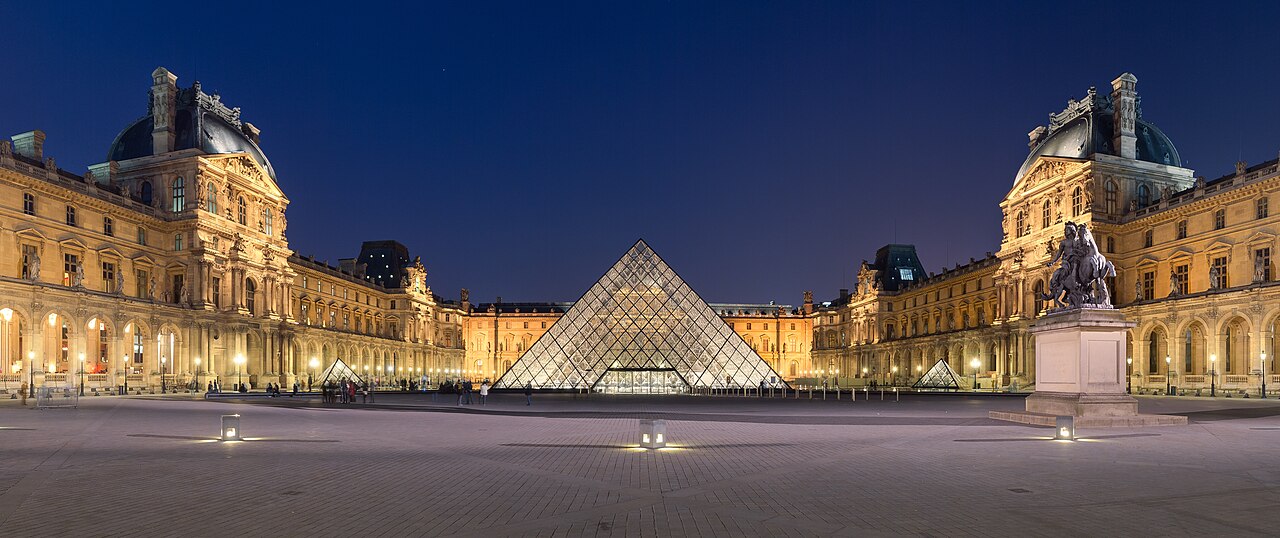
Don't try to see everything: with 35,000 works on display, it would take weeks. Instead pick three or four highlights, the Mona Lisa and her enigmatic smile, the Venus de Milo, the Winged Victory of Samothrace at the top of its staircase, and let the rest surprise you. A guided tour makes all the difference here: it turns an intimidating maze into a gripping story.
In the afternoon, head to the Île de la Cité, the very birthplace of Paris. It was here, on this small strip of land in the middle of the Seine, that the Gaulish Parisii tribe settled over two thousand years ago, founding future Lutetia. Admire Notre-Dame, gradually rising from the 2019 fire, then the Sainte-Chapelle, a Gothic jewel whose fifteen stained-glass windows flood the stone with red and blue light.
End the day wandering through the nearby Marais. A former aristocratic district of 17th-century mansions, now the trendy heart of Paris, it mixes galleries, designer boutiques and the famous falafels of the Rue des Rosiers. You happily get lost there, ice cream in hand, all the way to the Place des Vosges.
Guided tours & tickets for the Louvre
Skip-the-line entries and guided tours of the Louvre’s masterpieces.
Day 3, Bohemian Paris: Montmartre and its artists
For your last day, change the mood completely and climb the Butte Montmartre. Long a mere village of vineyards and windmills on the edge of Paris, it was only annexed to the capital in 1860, Montmartre became, at the turn of the 20th century, the laboratory of modern art. Picasso, Renoir, Toulouse-Lautrec, Van Gogh: all set up their easels or emptied their glasses in its cabarets.
Climb up to the Sacré-Cœur basilica, whose dazzling white dome watches over the city from the highest point in Paris. From its forecourt, the view embraces the whole capital. Come back down via the Place du Tertre, where portraitists set up their canvases as in the Impressionists' day, then slip through the cobbled lanes to the Clos Montmartre vineyards.
If you're an early riser and the call of formal gardens is strong, a trip to Versailles (barely 45 minutes by RER) is worth every detour. The Sun King's château and its Le Nôtre park embody the excess and genius of the Grand Siècle. Set aside the whole half-day: Versailles isn't visited in a rush.
Montmartre & Versailles to book
Guided tours of Montmartre, tickets for the Palace of Versailles and day trips from Paris.
Where to stay in Paris?
The choice of neighbourhood often makes the difference between a good and an excellent trip, because in Paris, time spent in transport can quickly eat into your days. For a first visit, aim central and well connected.
The Marais (3rd and 4th arrondissements) charms with its constant buzz and ideal location. Saint-Germain-des-Prés (6th) cultivates the literary charm of the Left Bank. Finally, the area around the Opéra (9th) offers an excellent compromise: central, connected to almost every metro line, and often more affordable. Just avoid staying too far out to save money: you'd pay it back in fatigue and travel time.
How long and what budget to plan?
Three days is the ideal format for a first city trip: enough for the essentials without rushing, short enough to stay within budget. Here are the key markers to keep in mind:
- Ideal length: 3 to 4 days for the essentials; add a day to include Versailles or Disneyland.
- Activity budget: count €30 to €50 per major visit (Eiffel Tower, Louvre, cruise).
- Transport: a book of tickets is enough for a short stay; a weekly Navigo pass pays off if you move around a lot.
- Best time: April to June and September to October, when the weather is mild and the crowds thinner.
You now have everything you need for a memorable stay. And if you want your itinerary to adapt to your wishes, hour by hour, let our app take care of it.

